
What this means for patients
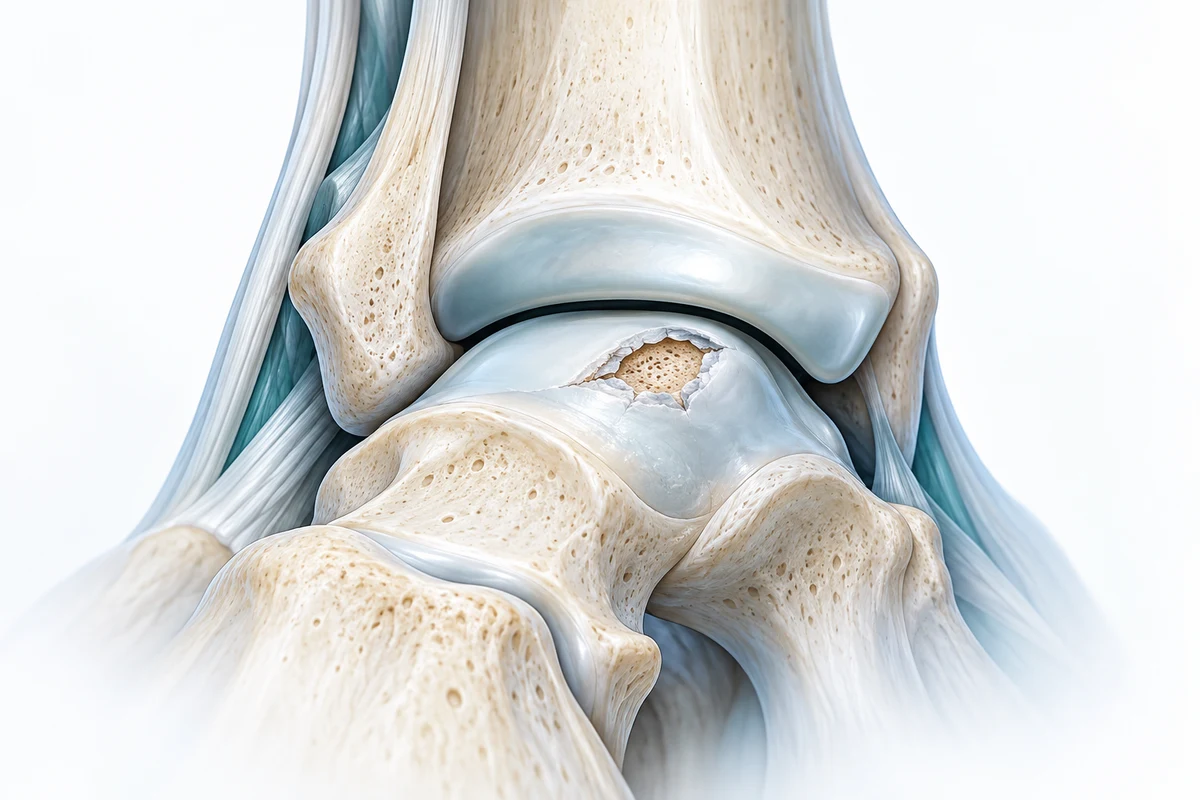
Cartilage covers the surfaces where bones meet in a joint. Injury can damage this surface and sometimes the bone beneath it, creating an osteochondral lesion. Ankle lesions may follow a sprain or repeated injury and can cause persistent pain, swelling or catching. Evaluation considers the lesion’s size, location, underlying bone and associated instability. The findings guide discussion of nonoperative care or procedures intended to address the damaged area.
Persistent pain after an ankle injury
An osteochondral lesion of the talus affects ankle cartilage and sometimes the bone beneath it. It may follow a sprain or repeated loading. Pain with weight bearing, swelling or catching that persists after an injury can warrant reassessment.
Imaging beyond an ordinary X-ray
Cartilage damage is not always visible on routine radiographs. MRI can help characterize cartilage, underlying bone and associated ligament or tendon injury. The size, location and depth of the lesion matter, as does ankle stability; a focal defect differs from widespread arthritis.
Match the procedure to the lesion
Selected injuries may be managed without surgery. For persistent symptomatic defects, discussion may include arthroscopic treatment, techniques that stimulate repair or osteochondral grafting. The choice depends on the lesion and previous treatment. Ask about protection, rehabilitation and the limits of cartilage restoration.
Questions for your consultation
- Does the injury involve cartilage alone or the underlying bone as well?
- Is ankle instability contributing to the problem?
- Which options fit the size and location of the lesion?
Educational summaries are not individualized medical advice.
Research & surgical education
Dr. Noman A. Siddiqui’s scholarship includes journal articles, book chapters and professional technique publications in foot and ankle surgery.