What this means for patients
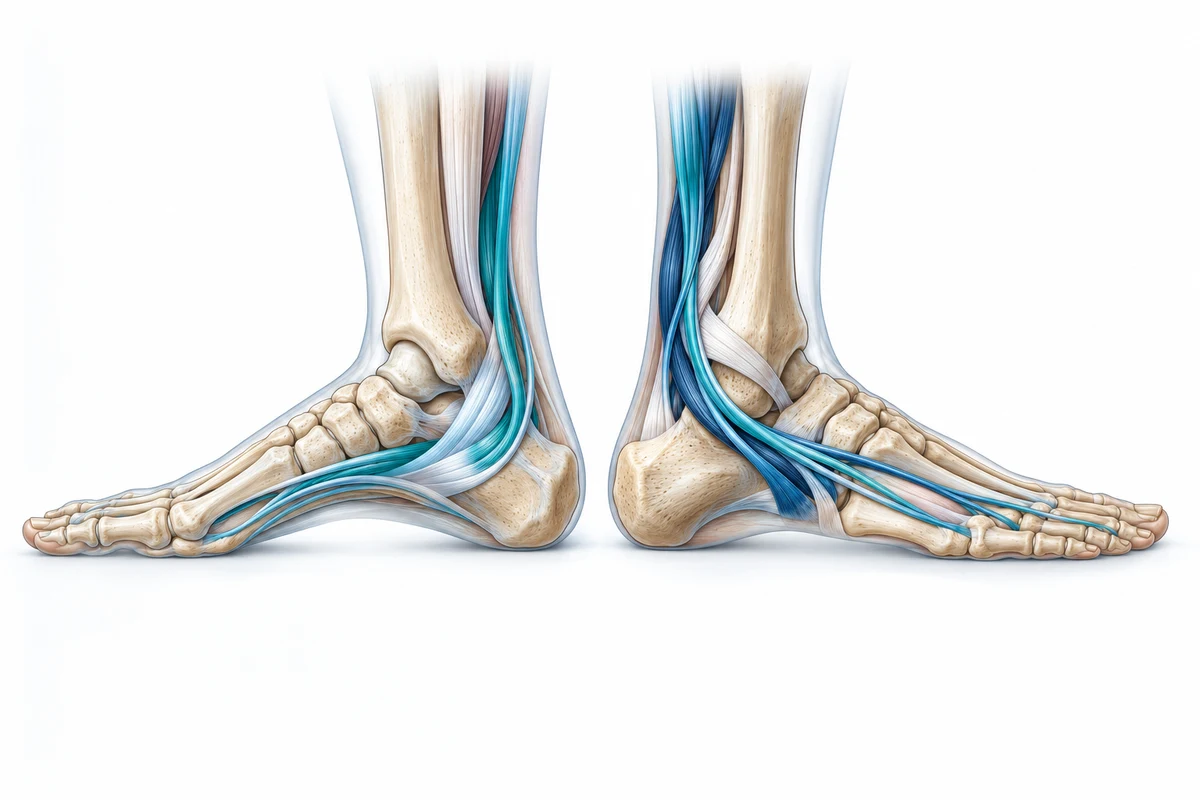
Tendons connect muscles to bones and help move and stabilize the foot and ankle. Overuse, degeneration, injury or muscle imbalance can lead to pain and reduced function. Assessment identifies the tendon involved and checks strength, alignment and any associated tear. Treatment may include activity adjustment, support and rehabilitation; selected structural problems may require repair or reconstruction.
Different tendons, different symptoms
The Achilles helps with push-off, the posterior tibial tendon supports the inner arch and the peroneal tendons contribute to outer ankle stability. Pain at the back of the heel, inside of the ankle or outside of the foot can therefore represent different problems.
Overuse, degeneration or a tear?
A gradual ache after activity differs from a sudden pop with loss of function. Examination checks strength, tendon continuity and foot alignment; ultrasound or MRI may help clarify a suspected tear. A possible acute rupture warrants prompt clinical assessment.
Restoring movement and support
Activity modification, protective support and rehabilitation may be appropriate for selected problems. A substantial tear, persistent structural damage or accompanying deformity may need repair, tendon transfer or alignment correction. Recovery depends on the tendon involved and the treatment chosen.
Questions for your consultation
- Which tendon is involved, and is there a tear?
- How does foot alignment affect the tendon?
- What are the rehabilitation and surgical options?
Educational summaries are not individualized medical advice.
Research & surgical education
Dr. Noman A. Siddiqui’s scholarship includes journal articles, book chapters and professional technique publications in foot and ankle surgery.