What this means for patients
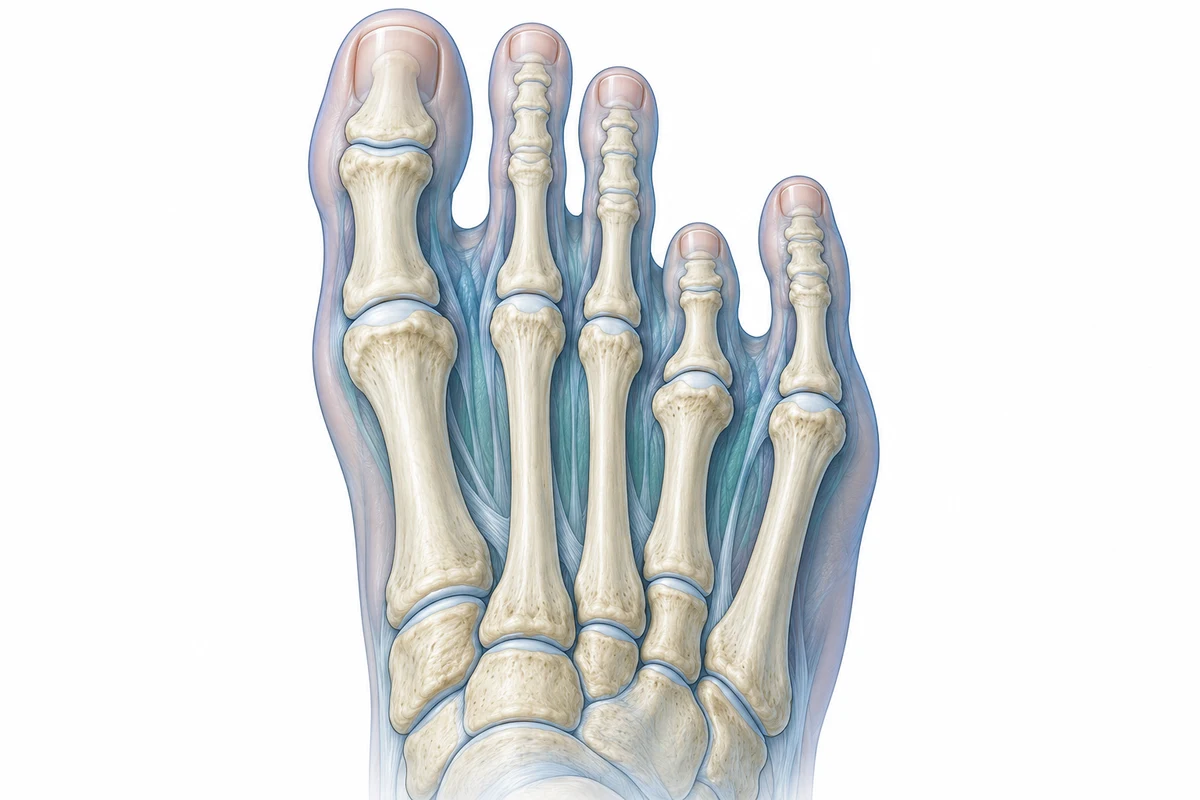
Brachymetatarsia means that one of the metatarsal bones is shorter than expected, which can affect toe position, pressure distribution and footwear comfort. Acute correction lengthens the bone in one operation, in contrast to gradual lengthening over time. The amount of correction and the surrounding soft tissues influence which method is suitable. Dr. Noman A. Siddiqui’s research includes acute versus gradual correction and single-stage correction of larger length differences.
How a short metatarsal affects the foot
The fourth metatarsal is commonly affected, although other bones can be short. A toe may sit farther back or higher than its neighbors. Uneven loading beneath the forefoot can contribute to painful calluses, while the elevated toe may rub against a shoe.
Acute correction versus gradual lengthening
Acute correction introduces the planned length in one operation, typically using a bone graft and fixation. Gradual correction separates the bone progressively with a lengthening device while new bone forms. Required length, toe alignment and the tolerance of nerves, tendons and skin guide the discussion; a single measurement does not decide every case.
Defining a realistic goal
Review X-rays, pressure-related symptoms and your priorities before choosing treatment. Ask about protection during healing, stiffness, fixation and follow-up imaging. Dr. Siddiqui’s related publications allow patients and colleagues to explore the evidence behind single-stage and gradual approaches.
Questions for your consultation
- Is acute correction suitable for the amount of lengthening I need?
- How do single-stage and gradual lengthening compare?
- How will healing and toe alignment be monitored?
Related published work
These citations cover related clinical themes; each original article defines its own scope.
Educational summaries are not individualized medical advice.
Research & surgical education
Dr. Noman A. Siddiqui’s scholarship includes journal articles, book chapters and professional technique publications in foot and ankle surgery.